‘The Substance’ lacks substance

This is the second of 10 reviews as I attempt to watch all 2024 movies nominated for the “Best Picture” Academy Award.

While watching this movie, I was reminded of “Her” from 2013. Like “The Substance,” “Her” snuck into the Oscar nominations as a low-budget, critical darling with some decent star power and an overt moral message — perhaps even warning — about what can happen in the not-so-distant future we when succumb to our desires for the perfect mate (Her) or the perfect self (Substance).

That’s where the similarities end. While the 2013 sci-fi comedy had hints of hope and ultimately a “happily ever after” ending, “The Substance” is a straight horror film. Demi Moore plays Elizabeth Sparkle, a fading and aging star who loses her role on a popular workout show for simply getting older. An over-the-top Dennis Quaid, playing the ratings-hungry producer, is seeking her replacement, prioritizing looks over everything.

Enter the substance. Through a strange series of events that makes little logical sense, Elizabeth ends up being solicited to try this new treatment that promises a “younger, beautiful and perfect” self. She gives in, and after going through an unnecessarily strange process to get the substance, finally injects it into herself. Within minutes, rather than transforming her body, the substance produces another lifeform out of her (think scenes from Alien). After a truly grotesque process, the substance produces Sue, played by Margaret Qualley, a “younger, beautiful and perfect” version of Elizabeth.

Sue auditions for the workout show role her source body just lost, instantly gets hired and becomes a sensation. However, to continue to live as Sue, she must keep Elizabeth’s body alive through a substance-provided food pack, and every weekend assume the body of Elizabeth. But using the substance requires a rigorous schedule, one that a hard-partying Sue can’t keep up with, and that causes some alien-like body issues. Sue and Elizabeth — who are supposed to be one — end up resenting each other and sabotaging each other, causing more and more problems with their body.

This movie’s message of body positivity is shoved down the viewer’s throat (or taken out of Sue’s throat in one particular scene). It’s using shock tactics to sell the message — like showing pictures of aborted fetuses to promote a “pro-life” message. When it comes to visual effects, this is one of the goriest movies I’ve ever seen. In the body transformations, nothing is left to interpretation. The climactic fight scene between a heavily defigured Elizabeth and Sue makes Tarantino movies seem tame. And the ending violence makes Tony Soprano look like a gentleman.

“The Substance” is too much. Released earlier in the year, this movie was off the Oscar radar until a late push came for the film and Moore, who won her first major acting award when she took home a Golden Globe for her role as Elizabeth. Recognition for Moore was long overdue, and her performance in the movie was solid, I think. It’s hard to focus on the actors when the substance of the film is drowned out with gore and preachiness.

Joe’s Judgement: 4/10

Wickedly fantastical flick

This is the first of 10 reviews as I attempt to watch all 2024 movies nominated for the “Best Picture” Academy Award.

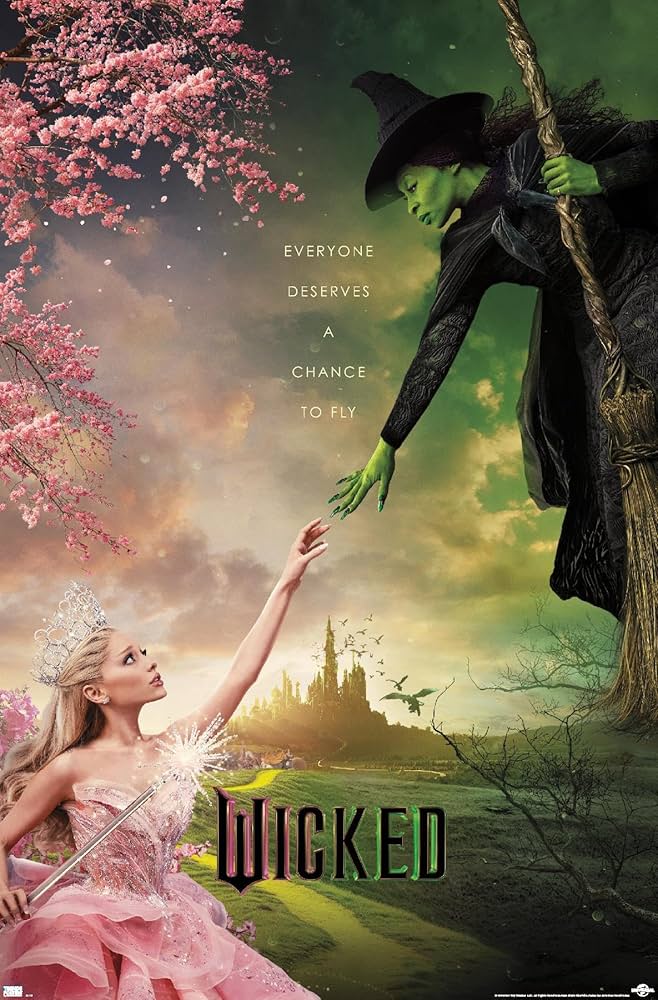
Of all the “Best Picture” nominees, the only movie I saw in theaters prior to the announcement was “Wicked.” I’m a huge fan of the musical was curious to see if Jon Chu’s big-screen adaptation would live up to the highly-acclaimed Broadway phenomenon.

Theatrical adaptations are hit-or-miss. Getting the singing and acting down isn’t too difficult — there’s hundreds of talented performers, from newcomers to international pop stars — clamoring to be in musical adaptations. It’s the set design and special effects that make adaptations of musicals work on the big screen. For every “Chicago” there’s a “Rock of Ages,” or even worse, “Cats.” And with the elaborate, imaginary world of Oz serving as the backdrop for the story, I feared “Wicked” would tilt towards the latter. Would Chu create a set that’s too over-the-top, making the movie a farce?

It was better.

What I feared would be “Wicked’s” biggest drawback is it’s greatest strength. Shiz University, where the majority of the film is set, makes Hogwarts look like a community college. Parents drop off their future scholars by boat at the waterfront quad. The dorm rooms are castle-like, complete with royal balconies. Most impressive is the spacious Shiz Library — or “book place” as Galinda describes it — decorated with giant wooden arches and rotating bookcases. Emerald City was another meteoric set design accomplishment. Although largely CGI-constructed, the neoclassical architecture and colorful scenery looks real, and feels magical. Production designer Nathan Crowley and his crew successfully pulled off their goal of creating something “fantastical,” and is a lock for an Academy Award for Production Design.

Chu did not take his extraordinary set for granted. Whether it’s the halls of Shiz University or the Wizard’s castle, the set is masterfully intertwined into the scenes, serving as vital a role as the actors. Most memorable is Jonathan Bailey’s (as Fiyero) performance of “Dancing Through Life,” that utilizes virtually every section of the elaborate Shiz Library, including performers opening and closing books to the beat while on the gravity-defying (pun intended) rotating bookcases.

“Wicked” was cast perfectly. Cynthia Erivo will make it difficult for Academy voters to deny her an opportunity to become the youngest performer to ever receive an EGOT, as her portrayal of the protaganist Elphaba was the best performance of her already-storied career. From the character’s deep vulnerability and desperate attempts to garner love and acceptance from her father to her self-assuredness entering a room for the first time and hearing people gasp at her greeness, Erivo demonstrated that she doesn’t just have great vocal range, but also has an incredible acting range. It’s impossible not to fall in love with her character.

The biggest surprise for me was Ariana Grande’s Glinda. The danger of having a pop icon in a highly anticipated film adaptation is that the star it too popular (pun intended) for the film. Whether intentional or not, the superstar can shift the attention off the cast and story and onto herself. It’s what happened in Madonna’s “Evita.” However, Grande demonstrates that she understands her role in the film as Glinda, the glamourous, ditzy and perky enemy-turned-best-friend of Elphaba. On paper, it’s easy to find Glinda’s character shallow and emotionless, but Grande makes you fall in love with Glinda, even when she’s trying to sabotage Elphaba. She’s not inherently superficial. She just doesn’t know any better. The moment when Glinda recognizes the pain she caused Elphaba is one of the most powerful emotional moments that happened on screen in 2024. And Chu does an excellent job of letting that scene breath — a long moment of silence in an otherwise boisterous film.

I’m not sure if “Wicked” will win the Academy Award for Best Picture, but it is certainly a strong contender. This movie serves as a blueprint for future musical adaptations.

Joe’s Judgement: 10/10

2016 Oscar predictions

One conclusion can be made from the 2016 crop of Oscar nominees: 2014 was an incredible year for movies. The Oscar nominee class from last year featured several stellar films with unique filmmaking techniques (Boyhood, Birdman, The Grand Budapest Hotel), a behind-the-scenes look at American heroes (Selma, American Sniper), and inspirational stories that focused on previously untold aspects of the lives of internationally acclaimed geniuses (The Theory of Everything The Imitation Game). This year’s class — movies released in 2015 — is underwhelming. Almost all nominated movies last year could take the top Oscar from any of the nominees for best picture … well except for one.

Following is a short review of each movie, in order from the most deserving of an Oscar to least deserving of an Oscar.
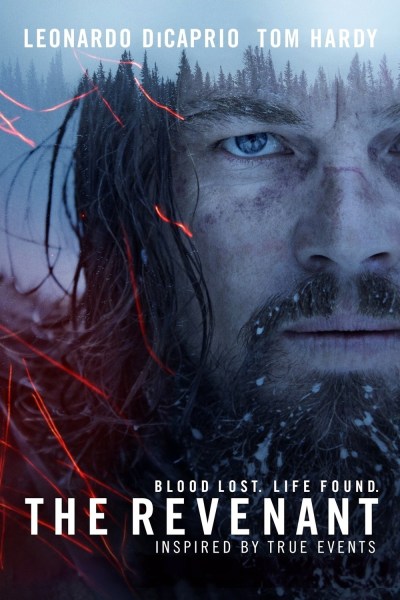
the-revenant-2015.39576Perhaps better than any movie ever released, The Revenant showcases the innate human desire to survive. Leonardo DiCaprio beautifully plays the role of frontiersman Hugh Glass, who has to fight to grasp on to every piece of life that is left in him. DiCaprio excels at showing us not only the physical pain, but the mental anguish suffered by his character.  His performance is so powerful that at times we become so distraught at his pain that we want to check out of the movie, just like his character must have wanted to check out of life. But his incredible performance, and the beautiful imagery ordered by director Alejandro G. Inarritu, makes The Revenant by far the Best Picture of 2015.

I’ve always thought that the hardest acting gigs were ones in which the actor largely acted alone in the movie (like Tom Hanks in Castaway and Sandra Bullock in Gravity). It’s easy to be a good actor when surrounded by other good acting performances. In The Revenant, DiCaprio is mostly on screen alone, and furthermore has no dialogue throughout much of the movie (unlike the narration of Matt Damon in The Martian). Yet he still displays a powerful performance, well deserving of the Best Actor award. Furthermore, Inarritu has cemented himself as one of the greatest filmmakers of this generation with The Revenant, which is drastically different from his previous award-winner, Birdman. While Birdman made us laugh with its clever dialogue and filmmaking technique, The Revenant made us cry with its raw emotion and imagery so powerful we felt the chill. For the second year in a row, Inarritu deserves the Best Director award. And in 20 years, he’ll be collecting  his lifetime achievement award.

The last time I was uncontrollably crying in a movie was in 2004 Oscar winner Crash. (If you didn’t weep when the little girl jumped in front of a bullet to save her father, then check your heart, because it’s probably not beating.) That changed when I watched Room. The story has two equally inspiring chapters: the first shows us how a kidnapped mom tries to paint an imaginary world for her growing boy, and the second shows us how the pair adapt to a brand new world once they escape. Admittedly, I never read the book. But the movie is very good. It’s a shame Jacob Tremblay wasn’t nominated for supporting actor for playing the 5-year-old Jack, because his performance was the most memorable aspect of a terrific film.

I saved Brooklyn for last on my Oscar movie binge. I had no doubt it would be a goodbrooklyn movie, but the storyline wasn’t my style: an Irish woman in the 1950s who immigrates to Brooklyn and later goes back to Ireland must choose between the two lives. To my surprise, I really enjoyed the movie. It was carried by a phenomenal performance by Saoirse Roman, who plays the socially awkward Ellis who finds herself adapting to the American way. Her character is not all that charming, but Roman makes us like her, especially when she is faced with her own moral dilemma. She is deserving of the Best Actress award.

Movies are often based on real-life events. But turning the 2008 financial crisis into a movie would seem to be a difficult task. A story about bankers and investors? A comedy about the big shortsecond biggest financial collapse in the world economy? That’s exactly what The Big Short is, and it’s very successful at it. Based on the Michael Lewis book of the same name, the film tells a highly complicated story about the housing market, default credit swaps and credit ratings in a unique way — for instance Selena Gomez explaining the intricacies of synthetic collateralized debt obligations — that makes what could’ve been a boring movie highly entertaining. While the cast is strong, it’s the writing that makes The Big Short shine, and is why director and co-writer Adam McKay deserves the Writing-Adapted Screenplay award.

As a journalist, there was no movie I was more excited to see than Spotlight. But where The Big Short succeeded, Spotlight failed. I wasn’t expecting Spotlight to make light of the story of Boston Globe reporters uncovering the Catholic Church molestation scandal, but the movie came off as more of a documentary than an entertaining movie. It will take its spot right next to All the President’s Men as one of the best investigative journalism movies ever, but not as one of the best movies ever.

The Martian is the lone science fiction picture among the nominees. Matt Damon plays an astronaut stranded on Mars, and like every movie Matt Damon stars in, we root for him. The movie is very entertaining, with its depictions of Mars and space and the always lovable Matt Damon. For the time-committed, it’s not nearly as gut-wrenching as another movie that clocks in at more than 130 minutes — The Revenant. Entertaining? Yes.  Award-winning? No.

With Tom Hanks star power, Steven Spielberg at the helm and an age-old rivalry of America vs. Russia, Bridge of Spies was destined to succeed. The movie is just OK, at times really slow. While the action and dialogue were just OK, the imagery was the star of the movie. Seeing the Berlin Wall being erected, watching a U-2 pilot being shot down, viewing a captive release at Checkpoint Charlie was all fascinating … but I can get that on The History Channel. I was hoping for more.

For the life of me, I cannot understand how Mad Max: Fury Road was included on the nominee list. I love action movies. And I can even handle brutal action if it has a riveting storyline (The Hateful Eight, Django Unchained … come to think of it, any Quentin Tarantino movie). But Mad Max sucks. The storyline is too simple. The acting is over the top. And the violence is too much. This was actually one of the worst movies I’ve ever seen, and the fact that Academy voters put this on the list over films like Straight Outta Compton, Chi-raq and The Hateful Eight just gives fuel to the argument that voters are prejudiced.

 

2015 Oscar Movie Reviews & Predictions

by Joe Dennis

Reviews published individually on Internet Movie Database.

My Oscars go to …

Best Picture: American Sniper
Best Director: Richard Linklater, Boyhood
Best Actor: Bradley Cooper, American Sniper
Best Actress: Felicity Jones, The Theory of Everything
Best Supporting Actor: J.K. Simmons, Whiplash
Best Supporting Actress: Patricia Arquette, Boyhood
Best Animated Picture: The Boxtrolls (not reviewed here)

The following reviews are in order of “should definitely win” to “why was this even nominated”?

AmericanSniper

Like 2010 Best Picture winner The Hurt Locker, American Sniper provides insight into how war impacts the psyche of soldiers. Although Navy SEAL Chris Kyle is celebrated among fellow soldiers, director Clint Eastwood lends as much time portraying the strain the war had on Kyle’s personal life, specifically his wife. Bradley Cooper (who trained for three months to gain 40 pounds of muscle) should win the Best Actor Award for playing the conflicted Kyle, who forces himself to develop a hatred of the enemy, referring to Iraqis as “savages,” so he can justify killing them. The action scenes provide an adrenaline rush, but it’s the intentional moments of silence — such as when Kyle, with finger on the trigger, is deciding whether to kill a child who is holding what appears to be a bomb — that make American Sniper the best picture of the year.

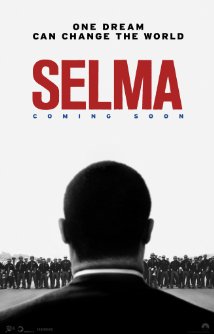
SelmaThere have been many films that rightly glorify Martin Luther King and the Civil Rights Movement, but Selma is the first movie to showcase the internal battles within the movement. Director Ava Duvernay places the focus on King’s struggles — not just with the people against him but also with the people on his side. David Oyelowo plays a King who remained determined in his battles with President Lyndon Johnson, his right-hand man Andrew Young and Malcom X. In the penultimate moment of the Selma march, we find King not engaged in a fight against segregationists, but in a struggle to save his marriage. Selma humanizes King, which strengthens his legacy.

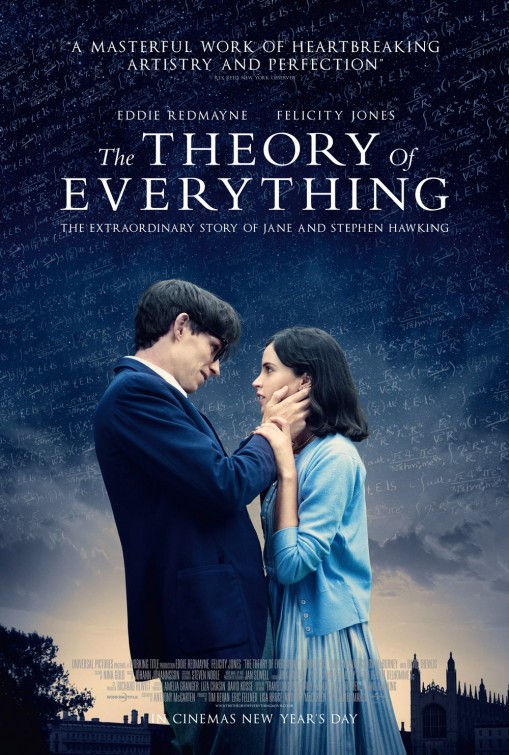
theory_of_everything_ver2The Theory of Everything is the ultimate love story. Eddie Redmayne does a phenomenal job portraying physicist Stephen Hawking physically self-destructing as ALS cripples everything but his mind. Redmayne showcases the pain Hawking must have felt at each new struggle he faces — such as his inability to crawl upstairs as his baby curiously stares down at his daddy through the baby gate. But the heart of the film is Felicity Jones, who should win a Best Actress award for her portrayal of Jane, Hawking’s determined wife. Jane refuses to let Stephen feel victimized, struggling to maintain a normal family life despite his crippling disease. Jane is the poster-child for the feminist wife: intelligent, determined and totally in control of her family.

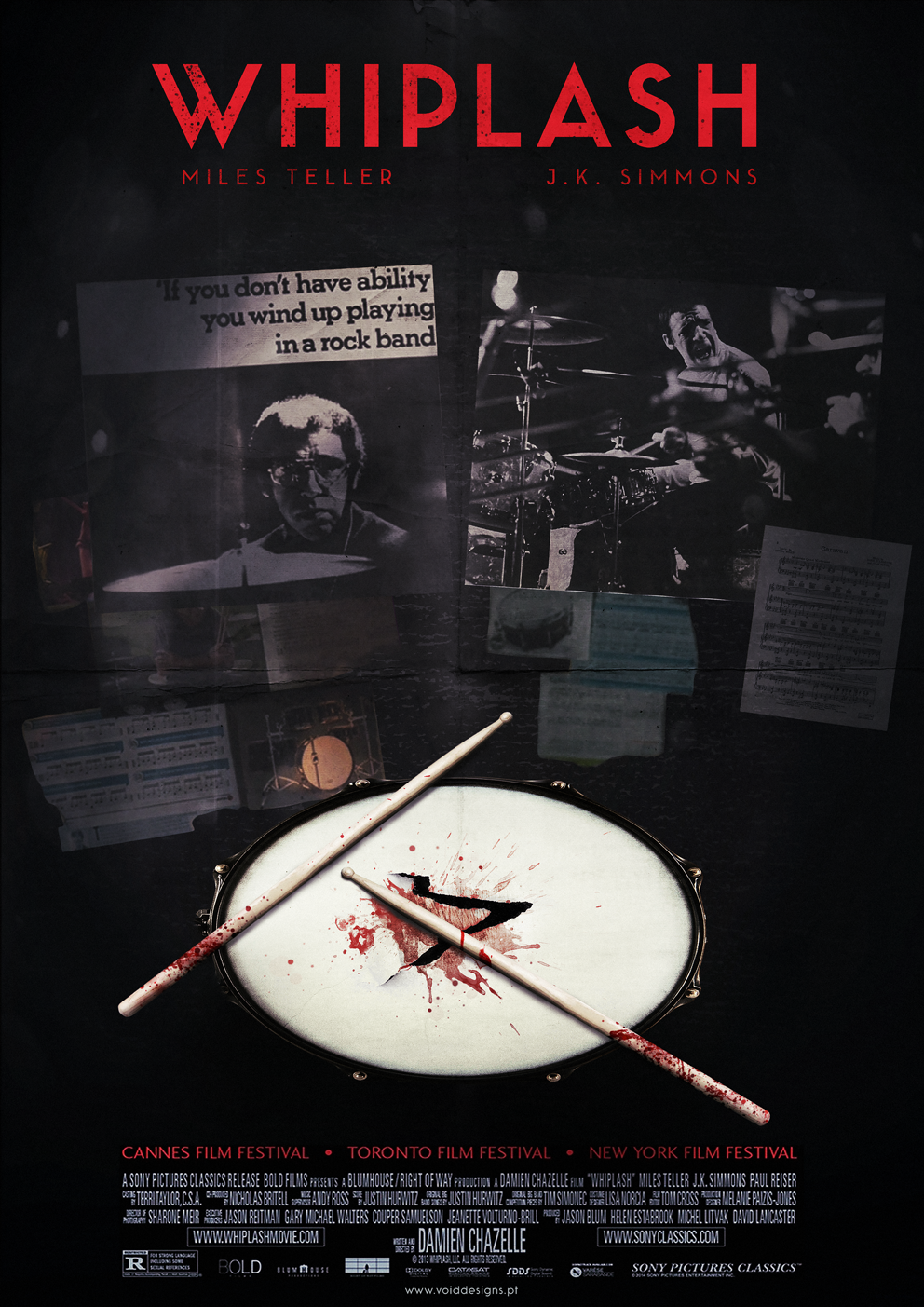
WHIPLASH1The dark-horse of the best picture nominees, Whiplash poses the ethical question, “how much is too much?” J.K. Simmons plays tough college music teacher Fletcher, whose mission is to find the next great jazz musician. In his efforts to get the best out of his musicians, he verbally, and at times, physically abuses his students. Simmons should win the Best Supporting Actor Award for playing the character we should hate, but for some reason have an affection for. The movie is accompanied by an outstanding soundtrack and the best ending of the year, however is cluttered with an unnecessary plot line involving the main character and a girlfriend.

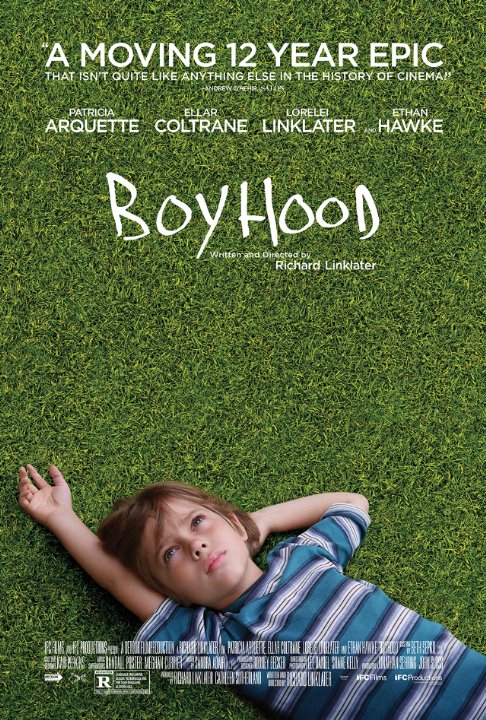
BoyhoodThe idea of Boyhood is groundbreaking — tracking a family over 12 years. It’s very neat watching a family evolve before your eyes. Director Richard Linklater should win the Best Directing Award for piecing together such a complicated puzzle. The movie promotes the growth of the boy, but it’s the development of Patricia Arquette as the mom that is most interesting. Arquette should win the Best Supporting Actress Award for showcasing a mom who is doing all she can to provide the best foundation for her children. While her kids are growing, the aging mother encounters homelessness, an abusive partner, and an absentee partner while she works her way through college to eventually provide the family with a firm — but still shaky — foundation. Although the premise of Boyhood is groundbreaking, the story — which is simply working class life — begins to lose its luster.

BirdmanHollywood is full of itself, and no movie is as self-serving as Birdman or The Unexpected Virtue of Ignorance This film is one big who trip, and its mere premise fails to make the audience feel sorry for main character Riggan, played by Michael Keaton. The disappointing ending adds to the viewer’s anger with the selfish Riggan. With that said, the movie has entertainment value. Tremendous acting jobs by Keaton, Edward Norton and Emma Stone (all deservingly nominated for Academy Awards) and the illusion of the movie being filmed in one continuous take make Birdman worth viewing, and makes director Alejandro Inarritu deserving of his Best Director nomination.

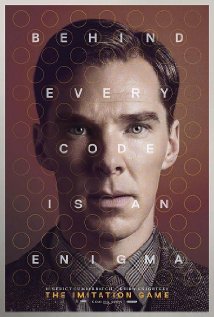
ImitationGameThe Imitation Game tells the true story of Alan Turig, a World War II British mathematician who develops a monstrous machine (now known as the computer) that ultimately helps defeat Germany. Benedict Cumberbatch is outstanding in his portrayal of Turing, whose life story has two major facets: the development of the machine and being charged for the crime of being gay. The fault in The Imitation Game is director Morten Tyldum’s attempts to tell both stories. Ultimately, the story of Turig’s inhumane sentence — undergo painful hormonal treatment to reverse his libido — was seemingly crammed into the movie, not giving it enough justice.

grandbudapestThe Grand Budapest Hotel is just plain weird. It’s the kind of humor director Wes Anderson is known for — think stupid humor for intelligent people. However, unlike his other films like Rushmore and The Royal Tenenbaums, The Grand Budapest Hotel storyline feels disjointed, and the main characters gets so wrapped up in hijinks that it’s difficult to remember just why they are in a given situation.