Conclave: keeping the church in check

This is the third of 10 reviews as I attempt to watch all 2024 movies nominated for the “Best Picture” Academy Award.

“Conclave” was damn good and, although fictional, very much rooted in truth if you think about the well-publicized scandals in the Catholic church. But it’s about much more than the church.

It’s a reminder that when you have a massive entity with centralized decision-making belonging to one person, the human desire for power and control will likely trump one’s desire to do what’s in the best interests of the organization. The only hope for democracy -er- the Catholic Church is to have a handful of morally-driven, God-fearing people near the seat of power who lack the desire to be “the one,” allowing that person to keep a clear mind when making decisions and advising the powerful.

In the movie, this person is played by Ralph Fiennes as Cardinal Lawrence. So distraught by the politics of the papacy, Lawrence wishes to resign only to be hand-selected by the terminally ill Pope to lead the Cardinals in finding his successor. Fiennes plays this reluctant character intelligently — the Sherlock Holmes of Vatican City — uncovering the demons of his fellow Cardinal frontrunners to be Pope, including John Lithgow’s Cardinal Tremblay, Stanley Tucci’s Cardinal Bellini and Lucas Msamati’s Cardinal Adeyemi.

I won’t give away the surprise ending, only to say the protagonist begins to chip away at his own moral fabric as he becomes obsessed with his own quest — not for power, but for the truth. A reminder that we’re all susceptible to our deepest internal desires. But hopefully, we all have someone around — not just a rubber stamp — to keep us in check.

Joe’s Judgement: 8/10

‘The Substance’ lacks substance

This is the second of 10 reviews as I attempt to watch all 2024 movies nominated for the “Best Picture” Academy Award.

While watching this movie, I was reminded of “Her” from 2013. Like “The Substance,” “Her” snuck into the Oscar nominations as a low-budget, critical darling with some decent star power and an overt moral message — perhaps even warning — about what can happen in the not-so-distant future we when succumb to our desires for the perfect mate (Her) or the perfect self (Substance).

That’s where the similarities end. While the 2013 sci-fi comedy had hints of hope and ultimately a “happily ever after” ending, “The Substance” is a straight horror film. Demi Moore plays Elizabeth Sparkle, a fading and aging star who loses her role on a popular workout show for simply getting older. An over-the-top Dennis Quaid, playing the ratings-hungry producer, is seeking her replacement, prioritizing looks over everything.

Enter the substance. Through a strange series of events that makes little logical sense, Elizabeth ends up being solicited to try this new treatment that promises a “younger, beautiful and perfect” self. She gives in, and after going through an unnecessarily strange process to get the substance, finally injects it into herself. Within minutes, rather than transforming her body, the substance produces another lifeform out of her (think scenes from Alien). After a truly grotesque process, the substance produces Sue, played by Margaret Qualley, a “younger, beautiful and perfect” version of Elizabeth.

Sue auditions for the workout show role her source body just lost, instantly gets hired and becomes a sensation. However, to continue to live as Sue, she must keep Elizabeth’s body alive through a substance-provided food pack, and every weekend assume the body of Elizabeth. But using the substance requires a rigorous schedule, one that a hard-partying Sue can’t keep up with, and that causes some alien-like body issues. Sue and Elizabeth — who are supposed to be one — end up resenting each other and sabotaging each other, causing more and more problems with their body.

This movie’s message of body positivity is shoved down the viewer’s throat (or taken out of Sue’s throat in one particular scene). It’s using shock tactics to sell the message — like showing pictures of aborted fetuses to promote a “pro-life” message. When it comes to visual effects, this is one of the goriest movies I’ve ever seen. In the body transformations, nothing is left to interpretation. The climactic fight scene between a heavily defigured Elizabeth and Sue makes Tarantino movies seem tame. And the ending violence makes Tony Soprano look like a gentleman.

“The Substance” is too much. Released earlier in the year, this movie was off the Oscar radar until a late push came for the film and Moore, who won her first major acting award when she took home a Golden Globe for her role as Elizabeth. Recognition for Moore was long overdue, and her performance in the movie was solid, I think. It’s hard to focus on the actors when the substance of the film is drowned out with gore and preachiness.

Joe’s Judgement: 4/10

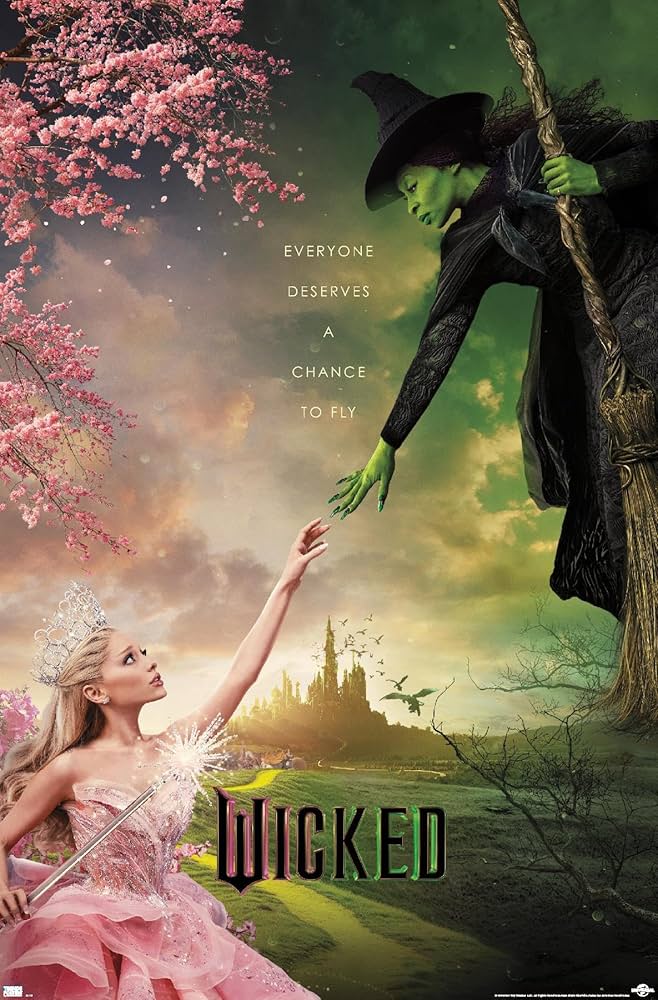
Wickedly fantastical flick

This is the first of 10 reviews as I attempt to watch all 2024 movies nominated for the “Best Picture” Academy Award.

Of all the “Best Picture” nominees, the only movie I saw in theaters prior to the announcement was “Wicked.” I’m a huge fan of the musical was curious to see if Jon Chu’s big-screen adaptation would live up to the highly-acclaimed Broadway phenomenon.

Theatrical adaptations are hit-or-miss. Getting the singing and acting down isn’t too difficult — there’s hundreds of talented performers, from newcomers to international pop stars — clamoring to be in musical adaptations. It’s the set design and special effects that make adaptations of musicals work on the big screen. For every “Chicago” there’s a “Rock of Ages,” or even worse, “Cats.” And with the elaborate, imaginary world of Oz serving as the backdrop for the story, I feared “Wicked” would tilt towards the latter. Would Chu create a set that’s too over-the-top, making the movie a farce?

It was better.

What I feared would be “Wicked’s” biggest drawback is it’s greatest strength. Shiz University, where the majority of the film is set, makes Hogwarts look like a community college. Parents drop off their future scholars by boat at the waterfront quad. The dorm rooms are castle-like, complete with royal balconies. Most impressive is the spacious Shiz Library — or “book place” as Galinda describes it — decorated with giant wooden arches and rotating bookcases. Emerald City was another meteoric set design accomplishment. Although largely CGI-constructed, the neoclassical architecture and colorful scenery looks real, and feels magical. Production designer Nathan Crowley and his crew successfully pulled off their goal of creating something “fantastical,” and is a lock for an Academy Award for Production Design.

Chu did not take his extraordinary set for granted. Whether it’s the halls of Shiz University or the Wizard’s castle, the set is masterfully intertwined into the scenes, serving as vital a role as the actors. Most memorable is Jonathan Bailey’s (as Fiyero) performance of “Dancing Through Life,” that utilizes virtually every section of the elaborate Shiz Library, including performers opening and closing books to the beat while on the gravity-defying (pun intended) rotating bookcases.

“Wicked” was cast perfectly. Cynthia Erivo will make it difficult for Academy voters to deny her an opportunity to become the youngest performer to ever receive an EGOT, as her portrayal of the protaganist Elphaba was the best performance of her already-storied career. From the character’s deep vulnerability and desperate attempts to garner love and acceptance from her father to her self-assuredness entering a room for the first time and hearing people gasp at her greeness, Erivo demonstrated that she doesn’t just have great vocal range, but also has an incredible acting range. It’s impossible not to fall in love with her character.

The biggest surprise for me was Ariana Grande’s Glinda. The danger of having a pop icon in a highly anticipated film adaptation is that the star it too popular (pun intended) for the film. Whether intentional or not, the superstar can shift the attention off the cast and story and onto herself. It’s what happened in Madonna’s “Evita.” However, Grande demonstrates that she understands her role in the film as Glinda, the glamourous, ditzy and perky enemy-turned-best-friend of Elphaba. On paper, it’s easy to find Glinda’s character shallow and emotionless, but Grande makes you fall in love with Glinda, even when she’s trying to sabotage Elphaba. She’s not inherently superficial. She just doesn’t know any better. The moment when Glinda recognizes the pain she caused Elphaba is one of the most powerful emotional moments that happened on screen in 2024. And Chu does an excellent job of letting that scene breath — a long moment of silence in an otherwise boisterous film.

I’m not sure if “Wicked” will win the Academy Award for Best Picture, but it is certainly a strong contender. This movie serves as a blueprint for future musical adaptations.

Joe’s Judgement: 10/10

Tethered to the Truth

Rising above partisan loyalties

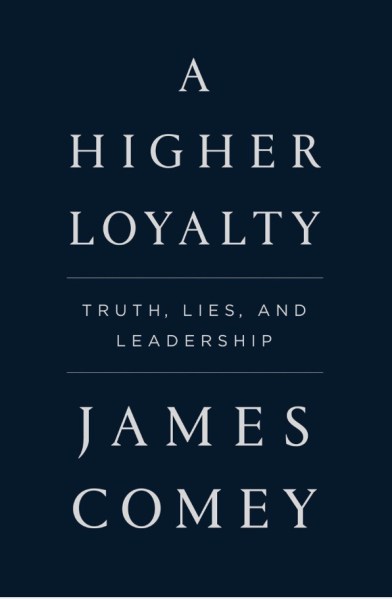
img_5715-1James Comey’s memoir, “A Higher Loyalty,” undoubtedly will be remembered for the final three chapters and the epilogue, in which the former FBI director recounts his interactions with President Trump.

Culled from since-released memos he wrote immediately after his encounters with Trump, Comey provides significant detail of his Presidential encounters, noting everthing from the firmness of a handshake to the location of the grandfather clock in the Oval Office. But more than just being there with Comey, the reader gets rare insight into how a career federal law enforcement official thinks. Tethered to truth and justice — a “higher loyalty” — Comey shows no deference to his former boss, calling the President “ego-driven,” “morally unfit” and a “mob boss.”

Many readers will do themselves a disservice and skip to the highly-publicized back of the book seeking to confirm their own criticisms about Trump, or discrediting the author as a self-righteous media hound looking to capitalize on Trump’s unpopularity. By doing so, they’ll likely see Comey as no different from any left-wing partisan who is critical of the President.

But if you read the book from beginning to end — starting with Comey’s time prosecuting the mafia (and Martha Stewart), his internal fights over spying and torture in President Bush’s administration, and finally his handling of the Hillary Clinton email scandal while serving under President Obama — you’ll see that Comey’s actions back up his assertion that he has “a higher loyalty.”

Democrat or Republican, mafia or Martha Stewart, Comey was never afraid to pursue the truth. Partisan pundits who criticize this demonstrated altruistic relationship with justice as being “self-righteous” simply reinforces Comey’s assertion that Trump — and his supporters — are “untethered to the truth.”

Joe’s Judgement: 5.0/5.0 stars

Fire and Fury … but fake?

Insightful book, but bad journalism.

img_5058-2“Fire and Fury” gives an unflinching look at the Trump White House. Wolff’s recounting of his conversations with Trump staffers reinforces several unflattering notions about the President: his inability to focus, he’s hot-headed and short-tempered, his narcissism and ultimately he doesn’t really care about the issues and only cares about being liked. It also sheds new light on the Bannon / “Javanka” rivalry, Trump’s frustration with a revolving door of Cabinet members, and how deep the Russian investigation may go. In the end, Bannon comes off like a genius mastermind — much to the dismay of the President — and the Trump administration is doomed.

The big concern with this book is that Wolff admits in his prologue that some of the content is essentially made up — what the author believes to have been said behind closed doors, rather than actual accounts of what was said. Wolff’s recollections align with popular perception, but is the perception feeding the narrative or the narrative building the perception?

As a journalist, the latter should be the case. But Wolff, a veteran journalist, breaks all journalistic rules by (admittedly) constructing some conversations with which he was not a witness, leaving the reader questioning what is actually true. And as President Trump continues to blur the lines between reality and “fake news,” this book does a disservice to credible journalism.

Joe’s Judgment: 2.0/5.0