2016 Oscar predictions

One conclusion can be made from the 2016 crop of Oscar nominees: 2014 was an incredible year for movies. The Oscar nominee class from last year featured several stellar films with unique filmmaking techniques (Boyhood, Birdman, The Grand Budapest Hotel), a behind-the-scenes look at American heroes (Selma, American Sniper), and inspirational stories that focused on previously untold aspects of the lives of internationally acclaimed geniuses (The Theory of Everything The Imitation Game). This year’s class — movies released in 2015 — is underwhelming. Almost all nominated movies last year could take the top Oscar from any of the nominees for best picture … well except for one.

Following is a short review of each movie, in order from the most deserving of an Oscar to least deserving of an Oscar.
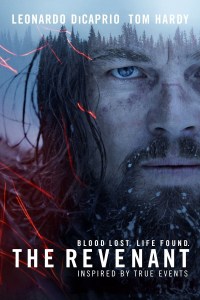
the-revenant-2015.39576Perhaps better than any movie ever released, The Revenant showcases the innate human desire to survive. Leonardo DiCaprio beautifully plays the role of frontiersman Hugh Glass, who has to fight to grasp on to every piece of life that is left in him. DiCaprio excels at showing us not only the physical pain, but the mental anguish suffered by his character.  His performance is so powerful that at times we become so distraught at his pain that we want to check out of the movie, just like his character must have wanted to check out of life. But his incredible performance, and the beautiful imagery ordered by director Alejandro G. Inarritu, makes The Revenant by far the Best Picture of 2015.

I’ve always thought that the hardest acting gigs were ones in which the actor largely acted alone in the movie (like Tom Hanks in Castaway and Sandra Bullock in Gravity). It’s easy to be a good actor when surrounded by other good acting performances. In The Revenant, DiCaprio is mostly on screen alone, and furthermore has no dialogue throughout much of the movie (unlike the narration of Matt Damon in The Martian). Yet he still displays a powerful performance, well deserving of the Best Actor award. Furthermore, Inarritu has cemented himself as one of the greatest filmmakers of this generation with The Revenant, which is drastically different from his previous award-winner, Birdman. While Birdman made us laugh with its clever dialogue and filmmaking technique, The Revenant made us cry with its raw emotion and imagery so powerful we felt the chill. For the second year in a row, Inarritu deserves the Best Director award. And in 20 years, he’ll be collecting  his lifetime achievement award.

The last time I was uncontrollably crying in a movie was in 2004 Oscar winner Crash. (If you didn’t weep when the little girl jumped in front of a bullet to save her father, then check your heart, because it’s probably not beating.) That changed when I watched Room. The story has two equally inspiring chapters: the first shows us how a kidnapped mom tries to paint an imaginary world for her growing boy, and the second shows us how the pair adapt to a brand new world once they escape. Admittedly, I never read the book. But the movie is very good. It’s a shame Jacob Tremblay wasn’t nominated for supporting actor for playing the 5-year-old Jack, because his performance was the most memorable aspect of a terrific film.

I saved Brooklyn for last on my Oscar movie binge. I had no doubt it would be a goodbrooklyn movie, but the storyline wasn’t my style: an Irish woman in the 1950s who immigrates to Brooklyn and later goes back to Ireland must choose between the two lives. To my surprise, I really enjoyed the movie. It was carried by a phenomenal performance by Saoirse Roman, who plays the socially awkward Ellis who finds herself adapting to the American way. Her character is not all that charming, but Roman makes us like her, especially when she is faced with her own moral dilemma. She is deserving of the Best Actress award.

Movies are often based on real-life events. But turning the 2008 financial crisis into a movie would seem to be a difficult task. A story about bankers and investors? A comedy about the big shortsecond biggest financial collapse in the world economy? That’s exactly what The Big Short is, and it’s very successful at it. Based on the Michael Lewis book of the same name, the film tells a highly complicated story about the housing market, default credit swaps and credit ratings in a unique way — for instance Selena Gomez explaining the intricacies of synthetic collateralized debt obligations — that makes what could’ve been a boring movie highly entertaining. While the cast is strong, it’s the writing that makes The Big Short shine, and is why director and co-writer Adam McKay deserves the Writing-Adapted Screenplay award.

As a journalist, there was no movie I was more excited to see than Spotlight. But where The Big Short succeeded, Spotlight failed. I wasn’t expecting Spotlight to make light of the story of Boston Globe reporters uncovering the Catholic Church molestation scandal, but the movie came off as more of a documentary than an entertaining movie. It will take its spot right next to All the President’s Men as one of the best investigative journalism movies ever, but not as one of the best movies ever.

The Martian is the lone science fiction picture among the nominees. Matt Damon plays an astronaut stranded on Mars, and like every movie Matt Damon stars in, we root for him. The movie is very entertaining, with its depictions of Mars and space and the always lovable Matt Damon. For the time-committed, it’s not nearly as gut-wrenching as another movie that clocks in at more than 130 minutes — The Revenant. Entertaining? Yes.  Award-winning? No.

With Tom Hanks star power, Steven Spielberg at the helm and an age-old rivalry of America vs. Russia, Bridge of Spies was destined to succeed. The movie is just OK, at times really slow. While the action and dialogue were just OK, the imagery was the star of the movie. Seeing the Berlin Wall being erected, watching a U-2 pilot being shot down, viewing a captive release at Checkpoint Charlie was all fascinating … but I can get that on The History Channel. I was hoping for more.

For the life of me, I cannot understand how Mad Max: Fury Road was included on the nominee list. I love action movies. And I can even handle brutal action if it has a riveting storyline (The Hateful Eight, Django Unchained … come to think of it, any Quentin Tarantino movie). But Mad Max sucks. The storyline is too simple. The acting is over the top. And the violence is too much. This was actually one of the worst movies I’ve ever seen, and the fact that Academy voters put this on the list over films like Straight Outta Compton, Chi-raq and The Hateful Eight just gives fuel to the argument that voters are prejudiced.


Breathe in, breathe out: meditate

The following was written as a Lenten Devotional for Oconee Street UMC on Feb. 16, 2016.

by Joe Dennis

Psalm 19:14: Let the words of my mouth and the meditation of my heart be acceptable in your sight, O Lord, my rock and my redeemer.

When I was younger, writing poetry was a passion of mine. I would isolate myself in my room, and all my teenage angst, coupled with what I now know was depression, elicited hundreds of poems. Most of them fueled with words of anger and desolation. My emotions were my ammunition for my writing, and it was so easy to get in touch with them.

As I got into college and into adulthood, the focus of my writing became journalistic. As my depression became treated and my angst faded, it became difficult to tap into my emotions to provoke my writing. Even when I was able to find a quiet place, my ability to write poetry was stifled.

Now, with the pressures of work and family, and the constant connectivity to external distractions through my phone (and watch and tablet and computer and TV and radio), finding a quiet place has been difficult for me. It’s been something I’ve been longing to do, especially after hearing fellow church members discuss the power of meditation and prayer. I’ve tried. But even in those rare times I can isolate myself from distractions, my attempts at meditation often end up like this:

Breathe in. Breathe out. Focus on your breaths. Talk to God.
Breathe in. Breathe out. Hey God. It’s Joe. Oh shoot. Did I ever register Jackson for baseball? Wait Joe. Not now. Focus. Breathe in. Breathe Out. Back to you God. So … wait a second. Damn. I forgot to put the empty boxes in recycling. Shoot. Now that will have to wait for two weeks. Joe! Focus! OK.
Breathe in. Breathe out. It’s me again God. I’m trying to focus here. So anyway … Please help me focus. Hmm. Focus.
P-H-O-C-U-S. It’s weird that the Vietnamese dish “Pho” is pronounced “Fa.” It makes no sense. JOE! STOP IT!
Breathe in. Breathe out. This is stupid. I’m going to check on Jackson’s registration.

I cringed when Lisa said at last week’s Ash Wednesday service that we will have time to meditate and work on an activity. With my three kids with me, I knew this would not be successful. My biggest concern would be keeping Jaydon off his phone, keeping Jackson quiet to not distract others, and keeping Matthew from running around. I even contemplated leaving.

But then Maxine took the boys away to do a kid-focused project. So I went to the activity table and naturally gravitated toward the writing exercise. I made sure my phone was on silent, read the prompt, grabbed a pencil and notepad, and started to center myself. And for the first time in decades, I was able to tap deep into my emotions through my writing.

For the first time ever, I feel like I had a heartfelt conversation with God. And it felt incredible!

Prayer: God. I know you are there, waiting for me to get in touch with you. Help me clear all distractions and find the best way to get to you.

Bye-bye Grady, from a student, staffer and teacher

After 11 years, two months and 16 days, I said goodbye to the Grady College of Journalism and Mass Communication at The University of Georgia.

It was a bittersweet farewell. Sweet, because I am starting a new path on my professional career that allows me to focus on what I love most: teaching. Bitter, because Grady is where my new professional aspirations took root, and because the halls of Grady are filled with some of the most influential people in my life. I was perhaps the only person in history to have the fortune of simultaneously fulfilling three roles at Grady: full-time staff member, student and teacher. Each role allowed me a different viewpoint of Grady. And combining all those viewpoints showed me that Grady is truly a special place.

CWSgNC_U4AAc3y7
The highly functional, dysfunctional family. From left, Dean Charles Davis, Cecil Bentley, Diane Murray, Stephanie Moreno, Karen Andrews, Joe Dennis, Sarah Freeman, Ryan Cary, Clare Wall and Hannah Bause.

Joe: The staff member

The Grady College has been an incredible place to work. In the past decade, I can’t think of one person that willingly left Grady for a lateral move somewhere else. And it’s certainly not because Grady pays well. It’s the people. The term family is often used lightly to describe cultural environments, but at Grady, there truly is a sense of family. If you’re willing to invest in the Grady family, the Grady family will invest back in you.

Of course, within the Grady family tree there are several smaller families. I was fortunate to work with the external relations team. We were a highly-functional, dysfunctional family. We all had such unique personalities and jobs that often didn’t relate to each other, but we were always there for each other: definitely in work, but also in life. And when we all got in the same room, fireworks happened — sometimes bad, but usually good. My years at Grady will likely be the only time in my life I looked forward to staff meetings.

For most of my years, Cecil Bentley served as our team leader and supervisor. Always level-headed, Cecil was the calming voice when tempers flared, the voice of encouragement when egos were hurt, and the voice of silence when one needed just to vent. Forward focus. Positive attitude. And a wicked move to the basket (though he rarely makes the shot).

With a strong institutional knowledge and a strong grasp of reality, Diane Murray is the devil’s advocate. Diane has a passion for Grady that many share, but this passion is balanced with a healthy dose of common sense. This can be quite frustrating when you’re aiming for the moon, only for Diane to tell you that you have no rocket ship. But in the end, you know she is just keeping it real.

Karen Andrews is one of the most amazing people I’ve ever worked with. Whether it’s a $150/plate gala or a picnic for high school students, Karen knows how to make every person feel special. Seemingly always smiling and a laugh that echoes throughout the building, Karen embodies the “Southern Hospitality” mentality I heard so much about when I moved South. Don’t get me wrong, Karen is human and has another side, but you’ll have to get real close to her to see it. I consider myself lucky that my “sister-from-another-mister” felt comfortable enough with me to show me that side.

The four of us were the mainstays of the external team for several years, through some lean budget times. But when we finally had the opportunity to grow, Sarah Freeman was brought on board. The ultimate professional, Sarah somehow maintains her professionalism while navigating the rocky waters of the external team, dishing out ideas and compliments when needed. She is definitely the sane member of the family. But just when you’re about to feel sorry for her, she unloads a joke that cracks everyone up. And you remember, she’s one of us.

Stephanie Moreno joined the team next. Sweet, sweet Stephanie — one of the nicest people you’ll ever meet. A journalist at heart, her passion for learning is evident in her work. I’ve never met another professional who continuously seeks criticism for her work. She was the baby of the family (in age and newness) for about a year, and perhaps because of this, or more likely because of her sweetness, made a concerted effort to get to know every member of the team.

Ryan Carty took the rattle from Stephanie, and certain members of the family consistently rattled their new little brother (sorry, Ryan!). But it’s his passion for Grady and incredible work ethic that define him, even if he gets a little star-struck by Ryan Cameron and forgets to take back my parking tag from the radio star. When the door locks are activated and the hallway lights shut off, Ryan is still in the building, planning new opportunities for our students.

The most recent member of the family is Clare Wall. Knowing I was leaving, I vowed on the first day I met her not to get to know her, but you can’t escape family. And dammit, I like her too. Although new to the team, Clare is not afraid to bring out the snark that has so defined our family.

There have been multiple interns that have come and gone, but Hannah Bause seemingly worked full-time during the Centennial months and became a de facto family member. Please be warned Hannah, our staff meetings are not typical. Don’t crack jokes while your boss is talking.

Speaking of boss, the functional dysfunction is certainly top-down, starting with the “My Dean is cooler than your Dean” Charles Davis. He lives and breathes Grady, and his passion is infectious. And his relaxed nature creates an environment for creativity to thrive, and maybe a little mischief to occur.

That’s my dysfunctional Grady family. But when we all get together, it works. For instance, last April in a torrential downpour after a highly successful farm party to kick off the Centennial, it was this team that went literally ankle-deep in the mud to load six cars with various items ranging from kegs to centerpieces. We were all angry, cranky, smelly and disgusting. But instead of bowing out leaving the job to another person, we stuck with it, together. Because that’s what families do.

Joe: The student

As a student, both at the master’s and doctoral level, so many faculty members have enriched and inspired me.

I had the fortune — or misfortune — of taking two theory courses with Dr. Jay Hamilton. Although I blame his courses for the doubling of my vision prescription (three course-packs … seriously?), it was his classes that showed me how to take control of my brain and grasp complex ideas.

Dr. Joe Dominick taught statistics to a group of numbers-challenged students, including myself, kicking off the semester by making us repeat the phrase: “Numbers are our friends.”

Dr. Lou Benjamin and later Dean Dr. Cully Clark showed me how to critically study, appreciate and recognize the importance of history.

Dr. Carolina Acosta-Alzuru taught me how to parlay my interviewing and reporting skills into critical and cultural analysis … even though I still don’t understand telenovelas.

Dr. Kent Middleton stoked my fascination in law and government and how it applies to the media, while helping me understand a second language: legalese.

Dr. Leara Rhodes helped me understand other cultures and how mass communication plays different roles around the world.

The late Professor Conrad Fink lifted the layer of journalism that was always foreign to me — the business side — teaching me the fundamentals of the industry, and also how to read an annual report to investors.

Picking up where Fink left off, Dr. Keith Herndon uncovered the incredible potential for journalism’s future in an age of digital and social media.

Mark Johnson taught me the critical role visual plays in journalistic storytelling, and he also stoked my interest in all things Apple.

And just when I felt confident in my journalistic writing abilities, Professor Pat Thomas taught me that there is always room for improvement, and reinforced in me the importance of using journalism to positively impact social change.

The danger in any list is leaving off people. For a complete list of every faculty member who influenced me, visit http://grady.uga.edu/directory/show2/category/all_grady_faculty/

Yes, that’s the directory of ALL Grady faculty. Whether in a class, a conversation or a presentation, every single Grady faculty member has shaped who I am. They taught me to think critically, the importance of research, how to teach and of course, a lot about mass communication.

Joe: The teacher

I’m lucky to have had the opportunity to teach at Grady, home to the best students on campus (literally … check the GPAs). I never thought I would feel pride in the accomplishments of someone who is not a family member or friend, but over the years, several students have proved otherwise.

I’m in a unique position at Grady, because I meet many students when they are in high school, and get to see them through graduation. Also, as adviser of UGAzine, I’ve worked with some of the “best of the best” at Grady. Finally, as director of GSPA, I’ve worked with many students at our annual events. Nothing impacts me more than when a student offers words of appreciation long after graduation, or seeks you out for a visit or cup of coffee when in town.

Thanks for reinforcing in me my desire to teach, and for making me feel special.

I started to make a list, but then kept realizing I forgot someone. You know who you are …


Chapter 6: I failed

I failed.

As much as people tell me, “Don’t look at it as a failure,” it is what it is. A failure.

The past six months there have been five aspects of my life: family, dissertation, work, church and personal — typically in that order. But the dissertation affected every aspect. I missed many Saturday “family days.” I neglected work emails and phone calls. I shrugged my church responsibilities. And personal time? Forget it. The dissertation followed me everywhere I went. I wrote while on the bleachers during my son’s baseball game. I spent a trip to visit my mom in Chicago locked up in a bedroom to write. I wrote during work. I wrote in church. I wrote in doctor’s offices.

My family sacrificed immensely, not only in my wife going without her husband and my sons going without their father for months, but also financially. I spent north of $1,000 paying for recording and transcription services, token gifts for my participants, and of course the open coffee tab at Starbucks, my official writing headquarters. I  bought my $750 doctoral graduation gown and planned a flight for my mom to watch me achieve the highest academic accomplishment in my field. And on Oct. 15, it was all worth it. I was done.

Only one step was left — the defense. It was supposed to be a mere formality. I know dozens of Ph.Ds, many of them who came through my program. Every single one of them breezed through the defense. Perhaps a revision now and then, but nothing to delay graduation. Failing a dissertation defense is almost unheard of — just google “failed dissertation defense.” At the point of the defense, the dissertation has been well-read and vetted by the committee. Any major issues should’ve long been addressed.

So I walked into the defense confident and proud. I couldn’t wait for that moment when I would be dismissed from the room so the committee can deliberate, and be invited back to the room to hear my major professor say, “Congratulations Dr. Dennis.”

But that didn’t happen. The form the committee must sign has three options: approve, approve with revisions, and disapprove. My dissertation wasn’t “approved.”  It wasn’t even “approved with revisions.” Perhaps not to completely crush my psyche, the committee didn’t “disapprove” either. The form disappeared. And I was told there were “serious concerns” about my study. My methodology was flawed. My research questions were misguided. My results were unreliable. “Don’t look at this as a failure,” I was told.

Countless family members, colleagues and friends knew I was defending on that day. And when I’m forced to tell them what happened, they all echo the same sentiment: “This isn’t a failure.”

But I did fail. All the missed family time, all the neglected work duties, all the shrugging of church responsibilities, all the money spent, all the neglecting of personal gratification was all supposed to lead to the graduation stage on Dec. 18. But it won’t. And it’s not because some tragic life event happened or because I gave up along the way — it’s because I failed.

To say I didn’t fail ignores the hard work I put into this, and the sacrifices my loved ones made to support me. After months of work with hundreds of pages of notes and text, I didn’t submit my dissertation for defense so the committee could debate whether I was going down the right path. I submitted it so they could approve it, and I could finally complete this chapter in my life that began in 2008 and has withstood the birth of my two youngest children, fires that destroyed my parent’s home and my church, the death of my father, a sickness that nearly killed my wife, and a myriad of personal health problems. The chapter was supposed to have a happy conclusion, with me finally graduating in 2015.

Now that chapter will have to be rewritten, much like my dissertation.

Because I failed.